Wednesday, May 16, 2018

A.F. Kuykendall by Ivah Kuykendall


My Father – A.F. Kuykendall
-by Ivah Kuykendall-

Papa at the Pool

I wish everyone could have had a father like mine.  He was the idol of my life.  He was so large and strong looking, and was always dressed appropriately-- even when he worked all day, with farmers who lived on the Frauenthal farms & there were many of them in Faulkner, White, Cleburne and Conway counties.  He would see that they had the necessary things they needed for their year’s work & that they could borrow money from Frauenthal and Schwartz to tide them over.  He could tell at the end of the season how many bales of cotton or bushels of corn etc and then see that they paid their debts to F&S at the end of the year.  Sometimes they were tempted to take their cotton out of county to have baled & then neglect paying F&S but Papa had a method he worked out by counting tolls on stalks. Then the stalks on a row and the rows and he could tell, to the bale, how much each farmer made.  All the customers knew he could estimate and therefore he never had any trouble with them on settlements.

Papa was a true Democrat.  He was the Democrat leader for Faulkner County.  Traveling as he did he learned lots & gave good advice.  He was many times persuaded to run for any office but never let them talk him into running.

All young people liked papa as well as the old people.  He could talk to any of them on any subject.  Papa didn’t see evil in anyone.  He listened but didn’t criticize.  Papa loved and respected his family.  Gave each child its share of attention and needless to say, how much his children loved and respected him.  Thanks to Mama!  She adored him and made us feel he was the finest & I knew he was the best looking!

Papa was the gentleman farmer, you might say.  He always held a job, at first a surveyor, then he worked at the Faulkner County Bank, and later for 25 years with the largest firm in the surrounding counties-- Frauenthal and Schwartz.  But he also knew everything going on around our farm.  He always had an overseer who lived on the place and Papa planned with him.  We grew cotton and corn.  Mama always had acres of vegetables of every kind.  In those days bugs & insects were not bad so no one ever had to spray.

When we were children papa played with us lots.  He always saw that we had horses to ride and I can remember when he brought us two little “jennies.”  We could ride them any time we wanted to.  They were really no good for anything else. We would have lots of friends from town who loved to come to our house because we were a big happy family with many interesting things to do.

In those days there were no entertainments- only what we made ourselves-- playing dominoes, checkers, hop scotch or marbles.  It wasn’t until we moved to town that we had a Victor Victrola.  Papa would let us buy records and he enjoyed listening.  We had many beautiful records.  Then came the day when we got our first radio!  The first one we got we had to use ear phones.  Then in a year or so we graduated to the kind where we could sit quietly in front of it and hear the wonderful news and mostly classical music.  That was great!  Every afternoon at 5pm “Amos &* Andy” came on and Papa would come in, turn it on and listen.  Then when it was over he flipped it off until the news came on at 6.

Papa dearly loved Roosevelt and when Roosevelt gave his fireside chats, papa would take a bath, dress himself up, get his cigar and go in and sit in front of the radio and listen to every word he had to say.  Never let us utter a word until it was over.  Then he always said, “that is the greatest man living.”  I believed him too.

As far back as I can ever remember Papa took the Gazette and each morning, summer and winter, he was on the porch to meet the Gazette boy.  I didn’t have to read the paper because he would read it to us while we ate breakfast.  Then in the P.M. he was ready to read the afternoon paper.  He called it the “Gimlet” or the Cabin.  The real name was “Log Cabin Democrat”.  We didn’t dare touch it until he finished reading.  How I would have loved to just get hold of that paper. 

Papa was loved and admired by his grandchildren.  He demanded respect & love from them.  They loved him and waited on him hand & foot.  I never saw my father take a drink or use an ugly word or curse.  His “by word” was “By Thunder”.  I often wondered what that meant.  Papa was a truthful, honest person. 

Every fall a circus would come to town “Barnham & Bailey” and Papa always took the whole family.  He thought it was educational for us to see the beautiful animals and acting etc.
I can never remember any time at Xmas that he didn’t see that we had a Xmas tree. It was lots of fun because our cousins and their parents came and they brought their gifts for their children.  I had one Aunt who had 2 boys and 2 girls.  She was Papa’s ½ sister.  Papa always had a gift on the tree for each one of them.

It was a great day when Conway got its first electricity.  We had our house in town strung for lights.  The wires were not in the attic.  We could see them.  They thought that was safer.  All the children, Papa & Mama got ready for the great event-- turning the lights on.  What a great day.  Then when Conway got water piped in we were the first on the line in Conway to get water.  The pipes came right thru our property for at least a mile.  Papa gave them the “right of way.”

When we lived on the farm & we were all small except the 2 older boys & Hettie, Papa bought us a surrey with fringe on it.  That was about 1906 or 7.  We children went to Church in the surrey and Papa and Mama took the 2 little boys and went in his buggy.  He always drove 2 farm horses to his buggy and that was a sight to behold.

The men and boys sat on one side of the house and the women and girls and babies on the other side.  I couldn’t enjoy Church for looking at Papa and wishing I could sit by him.  When Claudia and Ella got old enough to take Elizabeth and me with them we went to Church in town-- also Sunday School.  Papa said he’d rather go out in the country because he chewed tobacco and felt like it wasn’t proper to spit out the window in a town Church.

Papa was miserable when he retired.  In those days there was no retirement benefits, so he decided to build a swimming pool.  He had to have help in running it so Claudia and I stayed with him for 17 summers.  I taught in Conway & Claudia was Assistant to the Supt. In Ft. Smith so we had our summers free.  Many summers the brothers would help us, especially those depression days when they would be laid off their work.  They always knew they would be welcome back at home until they got other work, so therefore, they would help us.


Papa and Mama on their Golden Wedding anniversary


Papa always was at the pool.  His big responsibilities were supervising and advising.  He had his big rocking chair and he sat there and visited with people when they came.  Really that’s where he did his advising the people on politics.

When he got too old to stay down there all day, he sat under a big tree in front of our house and entertained himself counting the cars and people going to the pool and at the end of the day he could estimate how much we took in that day.  He never got too old to help get the days earning ready for the bank.  Hardly ever made a mistake counting those nickels and dimes.

Papa loved to burn grass.  He called it cleaning up & getting rid of weed seed & bugs, etc.  One day when he was become very old he wandered down to the pool (in the Fall) and thought he’d just burn around a little, so when he got ready to come home he thought he had the fire put out.  While we were eating supper one of the little King boys burst in the front door yelling “Uncle Frank, your swimming pool is burning down.”  Sure enough it wasn’t the pool but the building and all the contents.  Lucky to have it- the boys, Oscar leading and supervising it built another building and it was ready when the next season opened and it was a dream.  The whole upstairs was a big bedroom.  Claudia and I always slept down there and we always had several who shared our big room upstairs—always the lifeguards and the nieces and nephews when their grandmother and “Bad” (Hettie’s nickname) would let them.

Now back to Papa.  He had a very interesting as well as hard life.  His father died when he was 3 years old.  “Mother” (That was his mother, so all of us called her “Mother”) was left with 3 children.  Uncle Elias, Papa and Aunt Rebecca.  The Civil War came along and Papa was a very young child.  Uncle Elias was large enough to carry water to those who had to stand watch on duty.  Then when war was over Mother married her second young man, John P. King, who happened along.  He was a dashing young man!  Years younger than mother so she & he married.  They had 3 sons—Eslie, Balus, James (Jim) and one daughter Barbara.

When Papa became 17 years old he decided to get out on his own.  He had helped his Stepfather clear land and had done some farming. That was on the piece that later Papa bought, the place where his father and his mother owned—where we live now.

Papa left home and went to Texas and worked on a ranch for a year.  Then he came back to Arkansas and he and Mr. Livingston rented some land on the river.

Papa’s schooling-  Each child had for his primer a paddle hung around his neck with the alphabet on it.  Everything was memorized.

 As far back as 1856 there were no schools in Faulkner County.  Papa, born in 1856 described the school he went to as a he remembered.  His old grandfather Kuykendall, known as Granddaddy Kuykendall, [Adam Robert Kuykendall Jr] gathered all the children around him and taught them while their parents worked.  He had a fair education since he had been reared in North Carolina and Virginia.  This was a little settlement north of the present site of Conway.  Most of the children were relatives.  He got no salary.  Later my father went to a school 3 miles from his home. The teacher got a very low salary and the children’s parents took turns keeping the teacher.

Papa learned to survey by hiring a black man who knew how to survey.  Papa never told him he couldn’t survey so he became a very good pupil. 

A.F. Kuykendall Family, 1917:
Left to Right Top Row: Marcus, Oscar Stone, Claudia, Ella, Hettie, Ivah, Elizabeth
Seated: Mary Catherine “Mollie” Allen Kuykendall (Mama), Adam Franklin Kuykendall (Papa)
Bottom Row: Hiram, Robert and Arnold


Thursday, May 3, 2018

Aunt Pinkie's Memoir


Henrie Sentell Gladden


Henrie "Pinkie" Sentell Gladden was an older sister of my paternal grandmother, Annie Lou "Lucy" Sentell McBride. They were really half sisters, but you will read in Pinkie's memoir that they barely thought about that distinction.


In the summer of 2016 I made a pass through Baton Rouge and stopped at the LSU library. I knew they had a copy of Aunt Pinkie's hand written memoir. The staff let me take pictures of the pages with my phone. I didn't have my glasses so some of my photos turned out blurry, but I was able to transcribe the whole thing. It was about 62 handwritten pages. Here is what the first page looked like...


I made a PDF of my transcribed copy. It's much easier to read than the blurry photo'd pages. It's a great read. I can't promise I got every word right-- especially some of the names of people I don't know. Aunt Pinkie's handwriting was just fine; it was my photography that was lacking.
See the whole memoir at this LINK to PDF of Henrie Sentell Gladden's memoir.


Wednesday, April 11, 2018

When Cousins Marry

I was talking with someone about one of their 9x great grandparents.  The question came up-- how many ninth great grandparents do we have?  It turns out we typically have 2,048 ninth great grandparents.  Naturally, the number doubles with each succeeding generation.  It's simple math.  That is, until cousins get married.

There are several instances of cousins marrying each other in my tree.  One marriage, way back there, is in my direct line.  7th great grandmother Elizabeth Brashear married her first cousin Samuel Brashear in December of 1717 in Prince George's County, Maryland.  Even more egregious, they were double first cousins.  Their fathers were brothers and their mothers were sisters.  I understand cousins marrying was fairly common at the time--  well, maybe not double cousins.

The effect of this union changes the number of ancestors one can claim up and down the line.  Because they were double cousins, Elizabeth and Samuel shared both sets of grandparents.  Imagine sharing both sets of your grandparents with your spouse!  Their child, Benjamin has only 4 distinct great grandparents instead of the normal 8.  See in the graphic below how some of my 9th great grandparents show up twice in the same tree.  Each color represents an individual person.


The reduction in ancestors caused by this cousin union affects every descendant all the way down to me.  Instead of having 2,048 9th great grandparents, I have 4 less @ 2,044 (assuming there are no other cousin matches in my tree somewhere).  Consequently, that reduction doubles with each preceding generation.  I have 8 less 10th great grandparents and 16 less 11th great grandparents than typical.

Friday, April 6, 2018

Ursule Rose Dubois des Corbières

Saint-Servan-sur-Mer, Ille-et-Vilaine, Bretagne, France 


Virginia Lobdell Jennings in her book, "The Plains and the People," casually makes a claim that I have always found just a little bit brow-raising.  Her statement goes like this,

"Eugene Amedee Sherburne came from the vicinity of Rosedale, Louisiana and settled at Fontania Plantation near Port Hudson about 1835.  In later years this was called Fontania Landing.  His father or grandfather was in the diplomatic service in France and married Rose de Corbain who was wardrobe keeper for Marie Antoinette.  Eugene Amedee Sherburne joined Plains Presbyterian Church in 1857, died in 1859 and was buried on his plantation." (p.338).

Everything is great until you get the the phrase, "...who was wardrobe keeper for Marie Antoinette."  Though I can't claim to be fully aware of what that position entails, I would expect to see a footnote with sources cited for a claim like that.  Unfortunately, there is no indication of where that information originated.

Jennings book was published in 1998.  Many records have become more readily available since then.  We know now that Eugene Amadee Sherburne was born in France and it was his father, Samuel, who was indeed a diplomat.  Eugene's mother's name was actually Ursule Rose Dubois des Corbières.  I count her as a fourth great grandparent and she was 100% French, but was she wardrobe keeper for Marie Antoinette?

So lately, I've been researching- Who was Ursule Rose Dubois des Corbières and why is her name frequently followed by "des Corbières?"

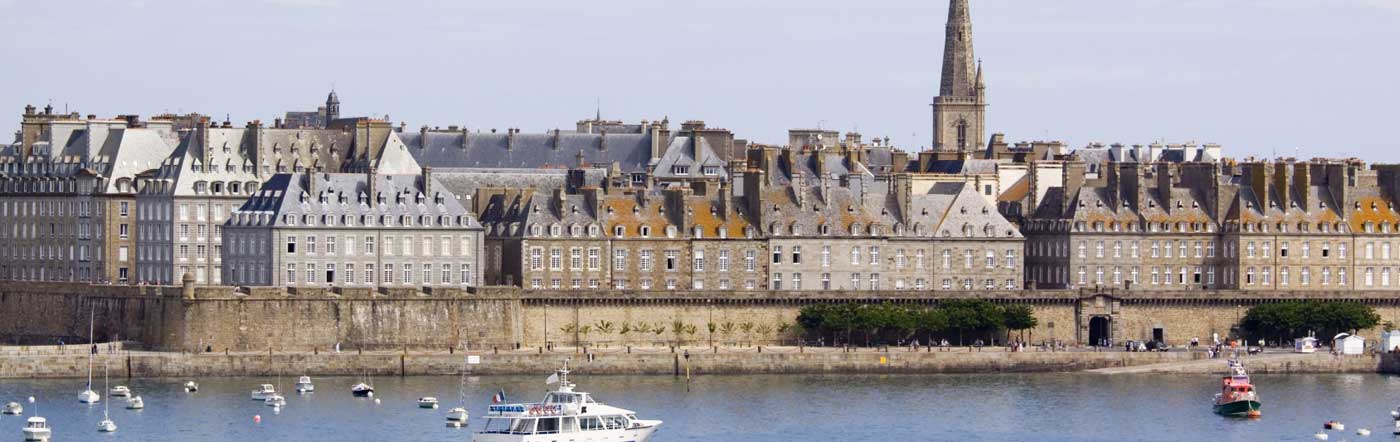
There are two locations in France that go by the name "Corbières."  One is a district in the south of France near the Pyrenees famous for its red wine production. The other is a section of the town of Saint Servan in the vicinity of Saint Malo.  This is a well known resort area in Brittany- on the northern coast of France.  St Servan and St Malo bleed into each other today.  This Brittany location is where we find United States Consul Samuel Sherburne and his bride, Ursule Rose Dubois in the late 18th century.

The first breakthrough came from a marriage record found for Ursule Rose and Samuel.  This is a fortunate document because not only does it give us a date and location for the wedding, but it also names the parents of both the bride and groom.  The wedding happened on August 3, 1796 at Saint Servan-sur-Mer, Bretagne, France.  We also have a St. Servan baptismal record for Ursule Rose.  We can estimate an early 1768 date of birth based on the October 13, 1768 baptism date.  This baptismal record seems to refute the DAR applications I'd previously been relying on that indicate her birth in 1776, Nantes.

Both the baptismal record and the marriage record name Rose's parents as Claude Dubois and Elizabeth Charlotte leMortellec.  Claude, I have learned, was a very prominent merchant, ship owner, alderman and treasurer for the local Parish at St. Servan-sur-Mer.  We now have birth and marriage records for him as well.  He was born in Brittany in 1725 and after the death of his first wife, married Elizabeth in 1757.  It is said he had 4 children by his first wife and 10 by Elizabeth Charlotte leMortellec.  Our Rose is the youngest of all of Claude's children.

Claude bought a substantial property in St. Servan-sur-Mer on September 9, 1756.  This was in the area known as Les Corbières.  There, it was most likely he who built or substantially renovated a Pavilion house 42'x 37' with cellar, a raised ground floor, upper floor of sleeping rooms and finally a mansard floor with additional rooms.  It is believed the original structure dated to the 1720's.  The house still exists.  It was substantially renovated and increased in size in 1900, but pictures of the original structure from the 1870's,  or so, show what it looked like when Rose was born there...

Dubois home sometime before 1900.  This is the home Rose was born into.

The home after the 1900 additions


The city of St. Malo and the surrounding area was virtually demolished during the Allied invasion of France in 1944.  It is estimated that only about 20% of the existing structures were salvageable due to the bombardment.  After the war, for a period of about 30 years, the buildings were "lovingly recreated stone by stone" says the local tourist brochure.


The Dubois family lived in the Les Corbieres area of St Servan for many years.  The area has a rich history.  Settled in the 1st century BC, it has been occupied by many peoples.  The Celts settled the area.  The Romans fortified it. In the 6th century, Irish monks established a monastery.  The monks are credited with naming the island in honor of a celtic bishop named Maclow.  This name has come down to us as Saint Malo.  Interestingly, St. Malo is similar in appearance to and not very far from the more well known island commune, Mont Saint Michel.  

During the time of the Viking raids, the surrounding inhabitants of St. Malo moved to the island and fortified it further.  In the 1400's through the 1700's and even up to the time of our Claude and his daughter Rose, the port was home to the famous French Corsair raiders- Privateers for the King. 

St. Malo about 1860

From the beginning, the port at St. Malo had been a very important node for international trade.  This is no doubt the impetus for Samuel Sherburne's initial contact with the Dubois family and meeting his future wife, Ursule Rose.  

Samuel Sherburne was born in New Hampshire to a well-to-do and established family.  He secured the position of United States consul at Nantes.  I believe this might explain the supposition by the DAR applicants regarding Rose's birth location. Nantes is about 95 miles due south of St. Malo.  

A consul was responsible for facilitating trade between a host country and the U.S. and also protecting the welfare of U.S. citizens abroad.  In Samuel's day, this primarily involved providing assistance to indigent U.S. sailors within his area of influence at Nantes.  Samuel served under the presidencies of John Adams, Thomas Jefferson and James Madison from about 1792 until about 1816.  He was only 22 years old in 1792.  

James Monroe would be the following President, but in 1814, he was Secretary of State and oversaw the duties and actions of all U.S. consuls.  I found a letter from that year in which he dismissed David Warden, the consul at Paris, and requested information  on  the conduct of Samuel Sherburne, the consul at Nantes and Mr. Vail, the consul at L'Orient.  I haven't found a response, but would be very interested to read it!  I did discover, however, that Mr. Vail, mentioned in the letter, was not only a fellow U.S. consul in a neighboring city, but was also Samuel's brother-in-law.  Aaron Vail, merchant of New York, married another daughter of Claude Dubois.  She was Elizabeth Ursule Dubois and they married 5 years before Samuel and Rose.  Both weddings were in Saint Servan-sur-Mer.  

Aaron Vail was an interesting character.  He had an abiding interest in the prospect of steam powered ships and became acquainted with a man named John Fitch.  Fitch was an American engineer working on a design for steamboats.  Vail invited Fitch to France to develop his prototype.  Fitch accepted but struggled in the execution due to the ongoing French revolution.  Fitch returned to America leaving his plans and sketches with Vail.  Vail eventually turned over the documents to another acquaintance, Robert Fulton!

Vail passed away in late 1813 and his wife and 6 children subsequently moved to Washington DC.  About this same time, Samuel and Rose Sherburne and their children moved to Baton Rouge, Louisiana.  Claude Dubois had passed away by this time but you wonder if the family was marrying daughters off to Americans intentionally- maybe to escape what was going on in France at the time.  Between Elizabeth's wedding and Rose's wedding, the French Queen, Marie Antoinette, had lost her head.

But none of this confirms whether or not Rose was "wardrobe keeper" of the Queen.  I have yet to find evidence for this claim.  Rose was 25 when the Queen was executed.  So, I suppose the dates work out ok.  It's possible.  The geography doesn't make sense.  Paris is 200 miles from St. Servans.  Wouldn't the wardrobe keeper need to be in the same location as the queen?  Perhaps Rose lived in Paris for a while in her teens?  We will need evidence.


St. Malo today

We don't know a whole lot about Rose after her move to the United States.  We know they settled in Baton Rouge in East Baton Rouge Parish around 1816.  Samuel passed away there on October 6, 1819.  In 1820 Rose is listed as head-of-household in the U.S. Census for East Baton Rouge Parish.  There are 8 household members.  One is a slave.  The children are indicated as 4 males between 10 and 25 and 2 females between 10 and 15.  Our Eugene Amedee is one of the males.  He was 18 in 1820. Rose was 52 or 53 at the time.

The following clippings are taken from the Baton Rouge Gazette September 23rd, 1820. The larger ad was on the front page...


I believe Madame Sherburne's academy for Young Ladies was run by our Ursule Rose DuBois Sherburne.  I don't see another Sherburne in the 1820 census for Baton Rouge who might fit.  Also, I find it interesting that she teaches all kinds of needle work.  Maybe this is circumstantial evidence for Virginia Lobdell Jenning's claim.


Saturday, March 17, 2018

Mary Catherine Allen Kuykendall

Mary Catherine Allen Stone Kuykendall
The following was transcribed from hand written notes Aunt Ivah wrote regarding her mother.  It appears to have been written some time in the early 1970's...


“My Mother”
Mary Catherine Allen Kuykendall
by Ivah Kuykendall


Born 1867 – Needs Creek – North of Conway
Died 1961 – January 20 Conway
Buried - Stone Cemetery

Mama was a peace-loving person.  Her strong quality was holding her family and the ones she loved together peacefully.  Such a huge responsibility for such a little woman.

She was a wonderful conversationalist.  I was never ashamed to introduce her to anyone – old or young – because I knew she knew how to carry on a conversation.  When she ran out of something to talk about she asked questions.  Sometimes her questions were a bit personal like “how old are you now?” or “now how old is your mother?  I believe she is about the age of my daughter, Claudia.”  She always said she kept a sore shin because of her direct questions, but that never fazed her.  She always had a quick comeback.  She respected one’s age and thought there was no harm in asking anyone their age and was delighted to tell hers.  No wonder she never looked her age, even at 93 when she passed away.  She said she had to stay young to care for our father who was 11 years her senior.

Mama’s habits were perfect.  Bedtime 9pm, rising 6am.  3 good wholesome meals a day.  Rest after lunch and plenty of outdoor exercise.  That was her recipe for long life.  Of course, very little worry did she have coping with the public.  She was not responsible for making money, paying bills or managing anything but her household affairs.  She had strong convictions about the family as a unit and practical keeping her whole family united.  She accepted every in-law and made them feel as wanted and happy as their mate.  The sweetest and most wonderful thing of all was the way her sons-in-law respected & loved her.  Her daughters-in law felt that they were wanted from the time they became a part of the family.  She could never see any fault in any of them.  Her grandchildren adored her.  She was always first with them.  They never wanted to do anything to displease her.  She would always say she enjoyed them more than her own. Children because she didn’t have to worry about helping to raise them.  She just loved and enjoyed them.  When they got too rowdy for her she sent them home.  Never one time was she ever ill with them.  She never interfered with the discipline the parents gave them, because she always wanted them to be trained properly.

Mama was the best gardener.  She always had something in the garden the year round.  Also, unusual things like rutabaga, asparagus, leek, rhubarb, mushrooms—anything she heard or read about she tried.  She was so generous with everything that grew in her garden.  If people didn’t happen in for her to give she called them or sent to them.

She spent most of her time in the garden. Out early, worked until about 10, brought in the things to be cooked by Hettie.  Rested, worked on her hand work until about 3 or 4 and worked again in her garden.  She followed a pattern.  She was a creature of habit.

Her hands were always busy.  She could blend colors – make the most beautiful quilts - handwork of all kinds, knitted, crochet, embroider or anything anyone else did.  Always making things for her children and grandchildren.

She could cook anything, but her specialty was relishes.  She followed a recipe in a fashion.  She tasted until she felt it was quite right.  No one had better canned things than mama.

Mama showed no favoritism among her & papa’s 10 children.  She treated everyone as individuals, what she did for one she would do likewise for the others.  She did show favoritism toward Hettie, her step daughter, and Oscar her son by her first husband (who caused her many unhappy hours).  She felt real close to both of them.  Hers and Papas children knew & felt this but never resented the feeling she showed toward Hettie.  (They were more like sisters than Mother – Step daughter.)  Hetty loved & respected & protected her.  Mama never showed jealousy toward Hettie.  Many times the children listened and took advice from Hettie maybe because she was always handy.  She did house work – Mama did outside work.

Papa laid the work out before he left for work (sometimes he’d be gone several days, since he was outside manager for a large firm, Frauenthal & Schwartz in Conway).  And Mama saw that it was done.  I always said she worked harder than the children & the hired hand or hands (and there were always hired hands there).  Also, we always had a maid to help in the house, and Hettie was responsible for her.  The maids were more than just a maid, she was treated with love & respect.  She soon learned to love & respect both Hettie and Mama.

Mama took in anyone who needed to go to school or needed a home.  Our home was for everybody, and when one came to our house he or she was made to feel that they belonged.  Some of the people who came to our house to live were:  Frank Mosely, Grover Kuykendall, Ida, Marietta, Claud & Ollie King – Janette Stofer, Buddy Singleton, Dick Budd – Bertie Brown, Barbara Kuykendall.  Effie Rauth, a little girl, came to our house to spend the summer when she was 11 years old, she never went back to the orphanage.  She was in 5th grade.  She finished High school and went to Vanderbilt studying to be a nurse but didn’t stay because she was not interested in being a nurse and it required a long period of time.  She was treated like the other children.

Now for the negro children she took in and trained and sent to school – James Bell & Rosa Robinson and little Willie.  Rosa wouldn’t go to school, but she was taught everything to do in and around the house.  James was brought to Conway to help take care of the grandchildren in the summer and stayed until he went to service.  He finished high school and went to college (Philander Smith).  James learned to do everything in the house, garden, yard, farm, swimming pool.  Everyone both negro and white loved and respected James.  Now he is in Gary, Indiana, quite well off- owns several large rent houses and worked in steel mills.  His wife was a teacher.  He now owns his own plumbing establishment.  He comes often to see us and calls us his “white family”.  He has 4 children (all with College educations).

Mama loved beauty and she showed it in the way she arranged her designs, yard, garden, house.

Her education was scattering because grandpa could never stay in one place long enough to let the children go to school.  Her IQ was above average.  She read lots of books, newspapers and magazines.  She could spell almost any word and used very good English.  She spent one year in a boarding school at Martinsville but Grandpa had to move to VanBuren and that was the last school she attended.  She had high ambition for her children.  When the eldest children were very small she decided that they must move to Conway where her children could go to school. That they did.  The children had to walk over a mile to school but in rainy bad weather the children were taken to school in a buggy.  She and Papa set aside $100.00 each fall to enter the children in school.  Usually money was made by the whole family, but the children knew we could have new books and things we needed like other children.  She saw that everyone had an opportunity to go to school, had everything they needed to work with and time to study.  Of course, Papa believed in education also but his opportunities as a boy were fewer than Mama’s.

Mama had some very difficult in-laws to deal with, but one would never know what she thought of them.  They were overbearing and jealous of her and her family, but she never failed to help them when she could.  She dearly loved Aunt Esther & Uncle Jim, felt more like they were her children than a sister & brother-in-law.  She never let many days go by that she didn’t see them.  They loved her and respected her.  Aunt Barbara was Papa’s ½ sister a widow with 2 daughters and 2 sons.  She had a hard time.  Mama loved her- would give her the last bite she had.  Not many days went by that mama didn’t see her.  She was different from Mama, but they had so many similar problems that they always enjoyed each other.  Mama always said, “Poor Barbara, she has so much good in her.  I wish she didn’t have such hard times.  Aunt Esther was so different.  She was Mama’s own sister.  She always made everyone feel so good.  She was so kind and sweet.  

“Mother,” that was Papa’s mother, was like Aunt Barbara, she could be the kindest person on earth and sometimes not so kind to the ones who loved her.  But Mama waited on her like a slave.  Papa adored “Mother” and Mama never did anything that would have made Papa unhappy, if she knew it.  

I have never seen such devotion in two people as Papa and Mama.  They were so congenial and thoughtful of each other.  Papa had great respect, love and devotion for her.  Thought no one ever could beat her doing anything.  When he drove up on the hill he wanted “your Mama” and never fear, she was there.  She laid all her outside work aside and gave him all her attention.  She adored and worshiped him.  Of course, she had all her children feeling the same about him.  She hardly ever threatened us with him.  She wanted everything to be in working in order, quiet and peaceful because “your father will be tired and worn out when he gets home.”  She gave him the best of everything—the first strawberries, butter (when it was scarce) anything he liked was saved for Papa.  When he came home they sat in their living room and he told her his experiences and she in turn told him everything that happened.  The children scampered out until they were through talking.  She usually bragged on each child to him and one could feel the warmth in his heart toward them.  He was always bringing her something unusual for the garden or yard.  She loved that.  Sometimes he would bring her a pretty piece of material he had found on his rounds.  Many times, he would take her with him when he thought the trip was not too tiresome for her or when he was going to be where some of hers or his relatives (and many there were) lived.  Hettie was always there to look after the children.

Mama always gave the feeling to her children that there was safety when she was there.  So many children but yet she never neglected giving them that feeling.

All young people liked mama because she was not critical of them.  She could talk with them about things they were interested in.

Mama never travelled far distances.  I’m sure she would have loved to go and see many places but no one else in the family in those days travelled much.  She just lived in her world around her and made it beautiful.

Mama loved jewelry, bows, ribbons, etc.  She always wore some kind of pen on her dress.  She hardly ever weighed more than 100 or 110.  Her little dresses looked so neat and petite on her.  Hettie always made them, and she knew what mama liked so she put the little frills on them.

She dearly loved her grandchildren.  She always said her own children she was always so busy helping to make a living for them and felt so responsible for their welfare, but her grand children she could love and enjoy and let their parents be responsible for their wellbeing.  All her grandchildren adored her.  She felt the same way about her great grandchildren.  She could never see any fault with any of them.  They treated “Nanny” (that’s what they called her) like she was one of them.  She had 8 grand daughters and one grandson.  Elizabeth & Bill Keller’s 4 girls, Marian, Sara Jane, Virginia Ann and Marjorie, Ella and Freeman Key’s 2 daughters Amy Ruth and Bobbie, Bob and Emmadean Kuykendall’s one daughter Ann and one son Bob Allen.  Mark and Ruth Kuykendall’s one daughter Mary Elizabeth. 

Now for great grandchildren.  “What a big glorious family,” she always said.

Harry and Marian LaFoe’s 2 sons, Edward & Bill
Sara Jane and “Pard” Castleman’s 3 boys, Randy, Tom and Vann
Virginia Ann and Bob Barton’s 3 sons, Chuck, Jeffrey, and Scotty and one daughter, Missy
Marjorie & McGinty McBride’s 2 daughters, Beth and Annie Lou, and 3 sons, Buddy, Keller & John
Ann and Bobby Parker’s one son, Rob and one daughter Carolyn
Travis and Mary Elizabeth Thompson’s one daughter Dawn
Amy and Bill Rudd’s 2 daughters, Judy & Beth and one son, Billy

There was something about Mama that made all the children want to come home on holidays and her birthday.  She would start days ahead getting ready for them.  Everybody had plenty to eat.  Special dishes for each. She always remembered what each liked.  There was always a good clean bed waiting no matter how many come.

Mama loved her neighbors.  She didn’t get to visit them much, only over the fence or telephone.  She never let anyone come to her house without going home loaded down with all kinds of vegetables or flowers.  Sometimes I would say “Mama you gave them all there was” and she’d say, “never mind, there will be more in time.”  I always wondered why everything she planted grew & produced so much.

Mama dearly loved to fish.  She would sit for hours in one place and while others were running up and down the bank she would catch the fish (always using those squirming worms).  It never made any difference how busy she was in the garden or yard.  Just mention fishing and out she went to dig worms.  Sometimes we went to Beaver Ford each P.M.  It was fun to watch her and Aunt Ester sitting quietly, talking very low and fishing for hours.

I guess the cutest thing she did was wearing her bonnets (she had many bonnets of every description).  She said they shaded her eyes.  Sometimes you could hardly see that little face of hers, snuggled in that little bonnet.

Mama never had but one bad habit according to me (she used snuff) but one would have to be a very observing person to see her using it.  She was very neat and clean with it.  It always fell my duty to buy it for her and oh how I hated it.  It embarrassed me to have to ask for it and usually Mr. Neal the Groceryman would see me looking in that direction and he knew-- so when I got home there it was.  She never told me when she was out.  I knew though because she seemed nervous.  The bottle or snuff can always sat on the mantle.

My mother never believed in telling a story for anyone.  Sometimes we would want her to tell someone we were not home or some other little discrete lie but she wouldn’t.  When someone from the store where Papa worked called for Papa (even if he was supposed to be at the business), she would not story for him.  She said she couldn’t make herself misrepresent.  That was one of the traits I admired in her.

When Mama’s children were in public school, she always stood behind their teacher.  She never allowed the children to come home with tales about their teachers.  They did not have PTA’s in those days. It was called S.I.A.  About every three months they had a money-making project.  Many didn’t have time to go but she always sent something for them to sell.  Usually a big fat hen, or turkey or such.

Mama was always concerned when any of her children were sick.  She couldn’t do enough for them.  Her little hands were rough from her garden and yard work but they would feel so good and gentle when she rubbed our heads or held our wrists to see if we had fever.  Always helped to get us well quicker.

Mama always had money for little things she wanted extra.  Usually the chicken kept her in money and she was so generous even begged us to take what we needed when we ran out of money ourselves.

One thing my mother never did was play games. She didn’t mind her children playing games- even buying them when we wanted to but she would do her hand work instead.

Tuesday, March 6, 2018

Boone

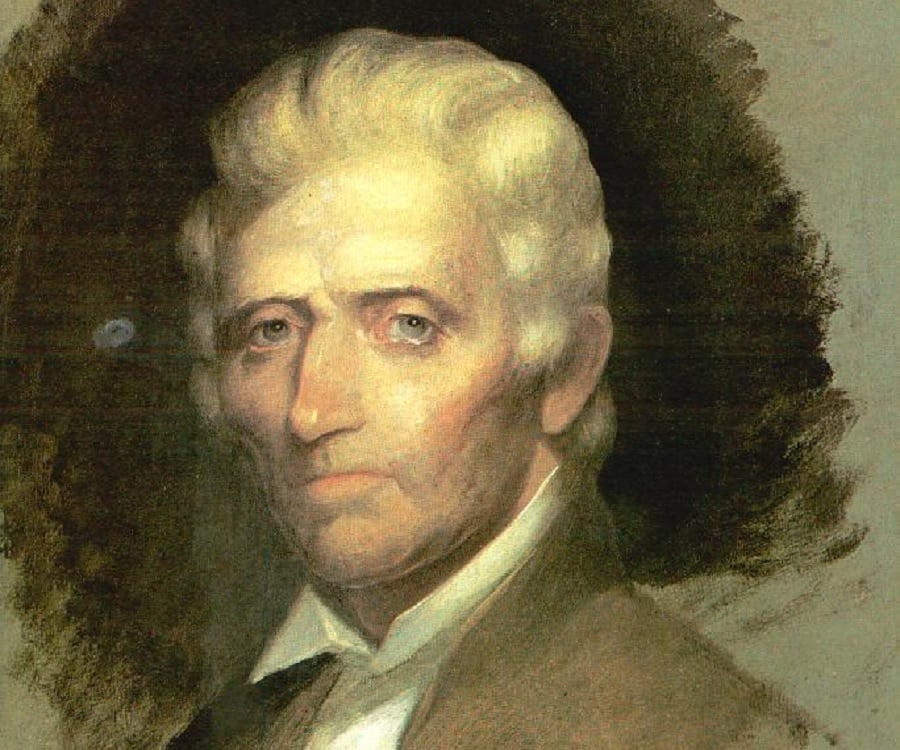
DANIEL BOONE

Tomorrow night the History Channel is beginning a new series called "The Men Who Built America:  Frontiersmen."  The first show is about Daniel Boone.  I have no idea how accurate this depiction will be, but the advertisements look great.  I'm told Leonardo DiCaprio is producing it - I gather because of his participation in the movie "The Revenant."

Daniel Boone is a first cousin.  Technically, a first cousin 7 times removed.  His mother, Sarah Morgan Boone, was the sister of my 6th great grandfather, John Morgan (1697-1747).  Daniel Boone and I share a grandfather - Edward Morgan.  Edward was Daniel Boone's grandfather and my 7th great grandfather.

 My lineage from Boone's grandfather, Edward Morgan, looks like this...


Edward Morgan was born in Wales and settled in Pennsylvania.  He built a home that is still standing.  It can be visited today at Lansdale, PA. I think you can rent it out for events!  See the website here...   http://www.morganloghouse.org/


I've found our Brashears (Dad's side) bumped into the Boones way back when.  The Brashears were headed through Kentucky and Illinois at the same time Daniel Boone was doing his thing.  Fifth great grandfather, Tobias Brashear who served under Gen. George Rogers Clark in the Illinois Campaign had an older brother named Marsham.  When the family was moving through Kentucky, Marsham stayed and operated a "Stand" on the Wilderness Road where Louisville, Kentucky is now.  He met and married Lucy Phelps who had lived through the siege of Boonesborough.  There is a book called "The Women at Fort Boonesborough" where she is featured prominently.  In it she is quoted by Lyman Draper, saying she watched Daniel Boone shoot an Indian spy out of a nearby tree as the Indian peered into the fort.


I also found a promissory note written by the brother of Daniel Boone, Squire Boone, to Marsham in which he records the sale of a slave to Marsham.  This letter was sold in an online auction a couple years ago.  I was able to grab the image from the auction site...


I've been looking forward to the History Channel's rendition of cousin Daniel Boone.  I hope it turns out worthwhile.