Friday, July 5, 2019

Our Pilgrims

The Mayflower in Plymouth Harbor, by William Halsall 1882


November of 2020 will mark the 400th anniversary of the landing of the Mayflower in the new world.  It's an anniversary celebrating another of those significant historical events made more personal and relevant by the realization that we had ancestors there as eyewitnesses.

Thanks to a 1856 marriage in Jackson Parish Louisiana joining the Baptist Minister William McBride and his bride the widow Ann Emelia Scarborough Hardy, I can point to specific grandparents that walked the deck of the Mayflower in 1620.  Ann Emelia's great grandmother was Nancy Doty, the great great granddaughter of  Edward Doty, a Mayflower passenger.  Nancy was also the great great great granddaughter of Samuel Fuller, another Mayflower passenger.  Samuel's parents, Edward and Ann were passengers too.  That's four people who made the voyage on the Mayflower that contributed to my DNA and that of all my family that descend from Ann Emelia McBride.

The General Society of  Mayflower Descendants publishes a multi-part volume originally titled, The Five Generations Project.  It's an aid for membership that lists the descendants of all the Mayflower passengers down five generations.  It is now called the Silver Books as the  project has expanded beyond five generations.  Because of this volume, a prospective member only needs to prove lineage to someone listed in the Silver Books.  The lineage above that person is considered already proven.  In my case, Nancy Doty was the ancestor I needed to prove lineage.  She is in the Silver Books and connects me to the four Mayflower passengers already mentioned.

9th great grandfather, Edward Doty was in his early 20's when he made the Mayflower journey.  Although he signed the Mayflower Compact in 1620, he is not considered one of the traditional "Pilgrims."  He was the servant of another passenger and remained so until becoming a freeman some years after the establishment of the Plymouth Colony.  Edward was the servant of Stephen Hopkins.  Hopkins was one of very few on the Mayflower that had made a previous journey to the new world.  That journey, fraught with excitement, saw him shipwrecked in Bermuda, a castaway for 10 months, sentenced to death as a mutineer (later commuted), a member of the Jamestown community and finally returning to England.  Why, after all that, he returned to the new world is anyone's guess.  His servant, Edward (my ancestor), developed the reputation of having been a bit of a rogue.  He appears regularly in the court records and is credited with carrying out the first recorded duel in the new world.  He and a fellow servant took to swords and daggers to settle a quarrel.  Both were bloodied  but neither died in the bout.  The Colony fathers sentenced them to be bound together by the head and feet for a day.  So heinously unbearable was the punishment that the men were separated after only an hour.

11th great grandparents Edward Fuller and wife were a little more tame and certainly more respectable in comparison to the antics of Edward Doty.  Originally from Norfolk, England, they made the journey with one young son, Samuel.  An older son was left in England to make the journey later.  Along with many other Mayflower passengers, they were living in Holland before the historic trip to the new world.  Some researchers say Mrs. Fuller's name was Ann, but there are no records to prove this.  I show her as Ann in my tree just for the sake of giving her a name.  Edward and Ann did not survive long in the new world.  They passed in the first season.  Their son, Samuel, became an orphan and was taken up by his uncle who was also named Samuel Fuller and also came on the Mayflower.  The two are frequently confused.  Uncle Samuel Fuller was a self taught physician and became the colony's doctor.

The younger Samuel Fuller is my 10th great grandfather and lived to 71. He died in Barnstable, Massachusetts.  He married Jane Lathrop, the daughter of John Lathrop, a congregationalist preacher who in 1634 left a prison cell in England for the new world on the condition that he never return.  Samuel and Jane had several children.  He outlived her and we find his will instructs that his oldest son receive Joel, an Indian slave, giving Samuel the dubious distinction of being the only Mayflower passenger to have been known to own a slave.

My descendance from these Mayflower ancestors looks like this...


Friday, May 24, 2019

James McBride (1773-1850)

James McBride is (and has been for some time) at the top of my Paternal line.  His line is a frustrating brick wall.  There are scant few documents available to help flesh out who his parents were. While we don't have a grave marker or a death certificate, we do have the family Bible belonging to his son, Daniel.  It was recently in the possession of Gladys Meadows, a 4th cousin and descendant of Daniel.  She said the following...
I have Daniel's bible and his parents death dates are given. James McBride Sr. died 28 November 1850 and his mother Sarah died 2 January 1854. I am sure they are buried at Antioch Cemetery. In 1850 census of Tippah Co. James and Sarah McBride lived next door to Anderson Street. An old letter exists dated 31 May 1858 where Daniel McBride writes a letter to his brother Sherwood McBride sending a draft for his share of their father's estate." - Gladys Meadows
Gladys passed away in 2012.  I'm not sure who has Daniel's Bible now.

Tippah County, where James is buried, is as far north as you can go in Mississippi. It is situated between Marshall County and Alcorn County on the Tennessee state line.  The town of Ripley, Mississippi is the county seat.  The area is replete with McBride and Street family descendants to this day.  I found the Antioch Church cemetery during a visit in May of 2015.  James' daughter Keziah's stone marker was easily located as well as those of several other family members.

James and his second wife, Sarah Jackson, migrated to Tippah County with the families of their son Daniel and their daughter Keziah around 1834-5.  Keziah McBride was married to Anderson Street.  That union produced fifteen children.  The ninth child, Seleta Street, was the first to be born in Mississippi.  Her birth date is recorded as 1835.  This tells us the family was in Mississippi very shortly after the land was made available for settling.  Although Mississippi became a state in 1817, North Mississippi was not opened up for white settlement until the Chickasaw land session of 1830.  Legal settlement began in 1834.  It would appear the McBride family were anticipating the available farmland and took advantage of it as soon as it was offered up.

James is found enumerated in the 1840 federal census in Tippah county.  He died in 1850 but not before he was included in the 1850 Federal Census. Sarah shows up in his household.  Neighbors listed around him include Keziah and Anderson Street and  James' son Daniel (owner of the family Bible) and his wife Mary.  We can assume James spent the last 15 years of his life in Tippah county living near the property of one of his children.  I have found no land records for James in Mississippi, though the census record indicates he owned property.

Cropped page from 1850 Federal Census shows James' age and place of birth


The 1850 Federal Census is the best document we have for James McBride.  In this census, James lists his age as 77.  That puts his birth around 1773.  Virginia is given as his birth state. Of course census records are not infallible but it seems a safe bet that this information can be trusted because James, as head of household, likely provided the information himself to the census taker.

Prior to his years in Mississippi, much of his productive years were spent in Tennessee.  His children were born there.  The breakdown of his family is best described in a letter we have from James Louis McBride, one of his grandsons...
My great grandfather and granmother came from Ireland sometime between 17 hundred and twenty five and fifty before they married and granfather serves at prentiship as a blacksmith trade and then he married and settled in Virginia. They lived there till after the Revolution war and they then moved to Tennessee. I don't know how many children he raised. They raised several sons I never saw but 2 of them that was my granfather James and Uncle Daniel. James was my granfather. His first wife was a Brock. She had 4 children before she died, 3 sons and 1 daughter, John was the oldest, was my father, next Sharword then William next Kisey (Kesiah).
My granfather second wife was a Jackson. She had 4 children 3 boys and 1 girl, Daniel, Jefferson and Solomon and Polly (Mary).
My granfather fout threw the Revolutionary war. Great granfather and granmother lived till they was 93.
There were two wives and two sets of 4 children.  Like James Louis McBride, I descend from the oldest son, John, of the first wife, Sarah Ann Brock.

I find it interesting that he says his granfather fought through the Revolutionary War.  The timeline doesn't quite work out for that statement to be entirely correct.  Assuming the 1850 census is right, James would have been only 10 years old at the end of the Revolutionary War.  But, I'm sure James Louis McBride didn't pull that statement out of thin air.  No doubt there was some oral history passed down to him.  I believe he was referring to his great grandfather (from Ireland) as having served through the Revolutionary War.  In the same letter, he calls the man who served an apprenticeship as a blacksmith, then married and settled in Virginia his "grandfather."  That man was obviously his great grandfather.  Maybe he was just loose with the terms.

It could also be he had his wars confused.  The ages work out for James Louis McBride's grandfather, James, to have fought through the War of 1812.  In my mind, it is probable that both men served their country.  Great Grandfather likely served through the Revolution as James Louis recalls and James McBride, at 40 years old, would still have been expected to respond to muster calls from his local militia in 1813.  There is evidence for that.

James' local militia were those formed in Lincoln County, Tennessee.  We have some land records for James in Lincoln County.  That's where he was farming during the 1810's.  He bought land on the headwaters of Kelly's Creek near the Alabama border and had it surveyed in 1808.  Kelly's Creek is a tributary of the Elk River that flows east/ west along the southern portion of the county.  His farm was about 13 miles from the county seat of Fayetteville, Tennessee.

Peter Tidwell, listed as a chain bearer on this Lincoln County survey plat, married Martha McBride, who is believed to be a sister of James.  Some of her descendants match me and other descendants of James with no other discernible connection other than the McBride family connection.  The plat maps are interesting because it was common for family members to assist in the survey of properties.  The fact Peter is listed on this one reinforces the theory that Peter's wife, Martha was a sister of James McBride.

Just up the Elk River from James and two miles south of Fayetteville was Camp Blount, where in 1813 Andrew Jackson collected the men that became his army who fought the first Creek War.  These men soundly defeated the Creeks at the Battle of Horseshoe Bend.  In 1814 the men mustered at Camp Blount were part of those that traveled with Jackson down the Mississippi River and ultimately defeated the British at the Battle of New Orleans.  If our James served, he likely mustered at Camp Blount.

James' neighbor, Joseph Street, was roughly the same age as James and lived 4-5 miles closer to Fayetteville and Camp Blount.  He became an in-law when two of his children married children of James.  Keziah and Anderson, mentioned earlier, were one of those couples.  Unlike James, Joseph's war record is pretty clear.  He was one of those who traveled down the Mississippi to fight at the Battle of New Orleans.  We know he died of illness while returning from that battle.  His wife's pension application spells out the whole experience with witness accounts from his superior officers.  I have a previous blog post about Joseph.

The search for James' 1812 service record has turned up two general index cards that record a James McBride in units that were formed at Camp Blount.  Our James could be one of these, both of these, or neither.   Unfortunately, I can't find a pension record for James.  The index cards only list the name, rank and associated unit.

General Index Cards for James McBride.  These units mustered at Camp Blount near Fayetteville, Tennessee 1813-14.  May or may not be our James McBride.

There is no way from these documents alone to confirm if this is our James.  Lincoln county, Tennessee was home to at least two James McBride's in the early part of the 1800's.  The other James McBride that we know of is buried in Belfast, Marshall County, Tennessee along with many other members of his McBride family.  I'll refer to the families from here on out by where they are buried.  I suspect we may be related somehow, but I have been unable to draw any connection between the Belfast McBride's and our Tippah County McBride's through records or DNA evidence. 

The Belfast James is said to have been born in Ireland in 1751.  He was 22 years older than our Tippah County James.  His pension record indicates he settled in Lincoln County Tennessee along the Duck river in 1812.  I find it unlikely that Belfast James could have served during the war of 1812.  He was in his 60's and his pension record for service during the Revolutionary War filed in 1832 has no mention of 1812 service.  He had no son named James, but it is possible he could have had a nephew or other relation named James McBride.


Family locations in 1813

It's very common to see ancestry trees online that lump our Tippah County James McBride in with the Belfast, Marshall County McBrides in one way or another.  Some list Belfast James as father to Tippah James.  More often, they list the parents of our Tippah County James McBride as John McBride (b. 1752)  and Margaret McGahey (b. 1757).  The argument is made that Tippah County James' first son is named John, likely after his grandfather.  John and Margaret are buried with the Belfast McBrides and it is highly likely that John is a brother of Belfast James.  While I think it is possible John and Margaret are related to me on some level, I do not believe they are the parents of our Tippah County James McBride.

We know a good bit about the McBride family buried at the Round Hill Cemetery at Belfast, Tennessee.  That family spent a fair amount of time in North Carolina.  Belfast James' extensive pension record lists the following...
From James McBride (b. 1751) Pension Record: 
  • Aug 1751 - he was born County Down, Ireland [Shortly after his birth moved to Lancaster Co. PA]
  • 1771 or 1772 moved from Lancaster Co. PA to Guilford Co. NC.
  • 1775 living in Guilford Co, NC at time of Revolutionary service. 
  • 1800 moved to Tennessee, principally in Williamson County, Tenn. 
  • 1806 moved back to Guilford Co. NC presumably to settle his father's estate, and lived there until spring of 1812.   
  • Spring 1812 moved to Lincoln Co. Tenn.   
  • 1832 living in Lincoln Co. Tenn. when applied for pension.
The Round Hill cemetery brothers, James and John, had a father named John McBride born in 1721 (Ireland).  He was married to Jean Gahey and he left a will in 1806 at Guilford, North Carolina.  In the will he names all his children including James and John as well as some grandchildren...

Last Will and Testament of John McBride, 25 Jan. 1806
I John McBride farmer of Guilford - In the name of God amen.  Being by the blessing of God in the perfect exercise of my reason, but in a low state of health do hereby make, appoint and constitute this my last will and testament.   I leave my mortal body to the grave and my soul to God who give it...
I do hereby name, constitute and appoint my well beloved son James McBride [buried Belfast, Marshall County Tennessee] and Samuel Allison to be the true and faithful executors of this my last will and testament...
I do leave and bequeath all the land that I am possessed of together will all the stock on it, and estate property and heredetennet (?) to the same belonging without any let or encumbrance whatever except what is hereafter mentioned in this testament unto my four unmarried children that is to say unto my son James McBride, my daughter Elizabeth, my daughter Jean, and my daughter Sarah, equally among them share and share alike...
I do leave and bequeath unto my son John McBride one hundred dollars.
I do leave and bequeath unto my daughter Margret McGaughy’s two sons viz David and James McGaughy thirty dollars each to be paid when they are come of age, remainder to one if the other dies sooner, remainder to their mother if both dies - .
I do leave and bequeath unto my said daughter Margret one cow as soon as she desires to have it after my decease...
I do leave and bequeath unto my grandson John McBride one hundred dollars together with one middle rated horse & a saddle...
In consideration of the distance of the place of residence of my house and to present disputes when I am deceased I do hereby prohibit and restrain those of my heirs each and every one of them from selling or anyway disposing of their particular part or share of the said land until they are all agreed to the same...
That this is my true will and testament I have hereunto signed and sealed in presence of Samuel McDill and William Cosbie this 25th of January in the year of our Lord 1806.
John McBride.
Witnesses present.
Samuel McDill (Jurat).
W. Cosbie.
State of North Carolina. Guilford County.
Mary Court 1806.
Samuel McDill proved the execution of the within will in open court and on motion ordered to be recorded ---  Then came in James McBride and qualified as Executor. 
The assumption I have found perpetuating online is that my Tippah County James McBride is the grandson of  John, the writer of the will, and the son of, John Jr., mentioned in the will.  None of the countless trees online support this assumption with record evidence.

The will names sons James and John, daughters Elizabeth, Jean, Sarah and Margaret (who married a McGaughy).  Grandchildren mentioned include David and James McGaughy and John McBride.  Many of these people mentioned are buried in the Round Hill Cemetery at Belfast, Marshall County, Tennessee.

My reasoning for discounting this family's proposed connection to our Tippah County McBride's is twofold. (1) The will does not jive with what we know about Tippah County James McBride (from James Louis McBride's letter) and (2) the current evidence offered by DNA testing does not seem to support it either.

James Louis McBride's letter says his great grandparents were from Ireland and "lived till they was 93."  John McBride and Margaret McGahey were 74 and 61 at their deaths.  Margaret was born in Pennsylvania.  There is some question about where John was born. Some say Ireland, but it is likely he was born in Pennsylvania also.  James Louis mentions his great grandparents settled in Virginia.  Tippah County James also says he was born in Virginia per the 1850 census.  This is counter to the Belfast McBride family history which shows no residence in Virginia.  They went from Ireland to Pennsylvania to North Carolina and finally to Tennessee.

The name Daniel does not show up in the Belfast, Marshall County McBride's family.  James Louis tells us this great uncle's name specifically (as the only one he could remember).  John's will (above) names three grandsons but does not mention Tippah James who would have been a 33 year old grandson at the time.

Secondly, I have found no cousins in my DNA matches that support a connection to the Belfast, Marshall County McBrides.  My brother has done yDNA testing at FTDNA.  The pool of matches is still a bit small, so there have been no big breakthroughs.  I have managed to rule out a couple McBride families but have not been successful narrowing the field of possible McBride ancestors.  I think this will come with time as more people do yDNA testing.

Additionally, I have autosomal testing for myself and two sisters that has proved helpful.  The McBride matches we share collectively have revealed probable siblings or really close cousins of Tippah County James McBride.  These include Martha McBride Tidwell  (mentioned above), Rebecca McBride James, Nathaniel P McBride, Daniel McBride, Thomas McBride and John McBride (who married Fanny Clark).  Unfortunately, the descendants of these 5th great uncles and aunts have no more information on their McBride ancestors than we do, but they do provide some new avenues for research.

My job now is to collect record information that confirms or denies the evident kinship suggested by these DNA matches.  Often, learning their family stories helps develop ours.  John and Fanny Clark McBride are one example.

In 1810 there is another property surveyed for our James McBride on Kelly's Creek where a John McBride is called out as chain bearer.  This John, born in 1782, is believed to be a brother of our James.  John married Fanny Clark and produced a large family.  Some descendants of that union match DNA with me and other descendants of James McBride in the same way Martha McBride Tidwell's did.  John and Fanny have no land records in Tennessee, but had children in Lincoln County.  They most likely lived on our James McBride's property.

Some time before 1830 the Tippah McBride's including John and Fanny moved from Lincoln County, Tennessee to Lauderdale County, Alabama.  James' son Sherwood bought property there.  That land is now under the waters of Wilson Lake just east of Tuscumbia, Alabama.   Tippah County James and his wife Sarah were there and probably his oldest son John (my 4th great grandfather).  Sherwood later moved to Hunt County Texas after a stint in Itawamba County, Mississippi.  Much of the rest of the clan also made the move to Mississippi around 1834-5.

There are no land records for Tippah James McBride after Lincoln County, Tennessee.  Census records show he lived in Tippah the last 15 years of his life.  The search goes on for his father.  Here is what I believe to be the facts regarding my James' father:
  • He was born in Ireland
  • Last name McBride
  • Immigrated between 1725 and 1750
  • Apprenticed as a Blacksmith
  • Married in the Colonies
  • Lived in Virginia before and through the Revolutionary War
  • Fought through the Revolution
  • Moved to Tennessee in the 1780's
  • Possible children include:
    • Martha McBride Tidwell (1770-1837) Virginia birth
    • James McBride (1773-1850) Virginia birth
    • Nathaniel P McBride (1776-1841) Virginia birth
    • Rebecca McBride James (1780-1834) Married in Tennessee
    • John McBride (1782-1869) South Carolina birth, Married in Tennessee
    • Thomas McBride (1785-1861) Tennessee birth
    • Daniel McBride
  • Lived very long life (possibly to 93 years old) as did his wife.

Wednesday, March 27, 2019

Dr. David Lewis Phares

At noon on Wednesdays, the Mississippi Department of Archives and History hosts "History is Lunch."  Generally, it is an opportunity for an author of History (typically Mississippi History) to pitch his latest book.  Usually there is an accompanying slide show.  If I've got nothing keeping me at the office, I'll walk over and check it out.  It's a nine minute walk through the heart of downtown Jackson.  There have been some interesting topics and great speakers and I, more often than not, enjoy the hour.  I always learn something.  On the rare occasion, I'll even buy a book.

Today's topic was the book, Images in Mississippi Medicine a Photographic History of Medicine in Mississippi.  The authors, Dr. Luke Lampton and Karen Evers, spoke.  They currently edit the Journal of the Mississippi State Medical Association.  Dr. Lampton spoke about the early history of Medicine in Mississippi.  We saw many pictures of the enormous Lunatic Asylum that was located in Jackson where UMMC is now.  There was much discussion about Doctors who impacted the early life of Mississippi as a territory and eventually a State.  Many names and portraits were presented during the hour.  Several of the names were familiar or at least vaguely familiar. 


One familiar name was Arthur Guyton.  He wrote a Physiology book that is world renown.  I went to camp with a couple of his grandsons.  Guyton was one of the more recent people discussed.  


A photo of a horse drawn "ambulance" from 1909 was shown.  The owner/ operator was named Hiram Hardy.  He operated in Jackson.  That name rang a bell so I wrote it down thinking this person or one of his ancestors may be in my tree.  I'd check it out later.


Another name that rang that bell was "Phares."  Dr. Lampton spoke about David Lewis Phares from Woodville, MS.  He was born in 1817 and graduated from what became Centenary College in Louisiana.  He later achieved a Medical degree from Tulane in New Orleans.  He practiced in Wilkinson County, Mississippi for 40 years, started a couple colleges, and was instrumental in the formation of Mississippi State University.  He taught at MSU for nine years.  Among other things, he served on the first Board of Health for the State of Mississippi. He was an early bigwig in Mississippi Medicine.  There is a great bio of him HERE written by our speaker.


Looking at my tree a little later, I did find Dr. David Lewis Phares.  He had two siblings that married into the Noland family.  The Noland's are my people.  Ann Phares (1821-1892) married William Avery Noland (1810-1874) and Samuel Phares (1802-unk) married Sarah Ann Noland (1821-1880).  William and Sarah Ann Noland's father was Pierce A Noland III (1785-1842).  He and wife Nancy Palmer are one set of my 4th great grandparents. 


The image below is a detail from an original plat map from the extreme southwest corner of Mississippi.  I believe this was drawn up in the 1820's.  The property to the left of Pierce Noland's is labeled "William Phares."  He was David, Ann and Samuel's father.


The Phares and the Nolands were both American families with European backgrounds that moved from the east coast in the early 1780's.  They became Spanish land grant holders and neighbors in what eventually turned into the Territory of Mississippi.  This was an interesting time in Mississippi and Louisiana history when the land was changing hands between colonial powers.  Pierce Noland III was likely born on that property when it was Spanish held.  As a teen, he saw it fall under the jurisdiction of the United States. 

The straight line on the south side of the Phares and Noland properties at the bottom of the map is the 31st parallel.  This portion is sometimes called the Ellicott line- named for the man that George Washington asked to survey it.  Today it is the boundary between Mississippi and Louisiana.  At the time when the Noland's and the Phares' lived there, it was the border between the Mississippi Territory (United States) and Spanish West Florida.  It was an international boundary.  Another couple miles west on the Mississippi River was Fort Adams, the official Southern "Port of Entry" for the United States on the Mississippi River.  Pierce Noland II (5th great grandfather) is supposedly buried at Fort Adams.  More likely, he was buried on his property and the death was documented at Fort Adams as it would have been the local seat of government.

The Phares and Noland families lived and farmed this land when Andrew Ellicott's survey crew came through in October of 1798.  Pierce III was 13 years old.  Ellicott's journals indicate he had a falling out with his co-leader, Thomas Freeman at Thompson's creek.  You will notice on the map that Thompson's creek crossed the 31'st parallel on Noland's property.  Freeman stormed off at that point and left the party.  He later led the 1806 Freeman-Custis Red River Expedition as requested by Thomas Jefferson.  I wonder if my Noland's were witness to the argument between Ellicott and Freeman.  It was in their backyard, afterall.

That's my connection with the esteemed Dr. David Lewis Phares.  Our families were neighbors and married into each other way back when.  I don't share an ancestor with him as far as I know, but some of my cousins do.

That other guy that sounded familiar in today's History is Lunch program, Hiram Hardy, is likely not related either.  He is not in my tree but he sounded familiar because Hiram Hardy Hargrove is in my tree.  Hargrove was the first husband of my great great grandmother, Ann Emelia Scarborough.  After his death she married Rev. William McBride.  Hargrove was from Georgia and died in Louisiana, but did have property in Mississippi.  I don't know about Hiram Hardy, the ambulance operator's background, but it could be that he and Hiram Hardy Hargrove were both named for an earlier Hiram Hardy.  Who knows!

Here is a link to the book that was highlighted at today's History is Lunch...

https://www.msmaonline.com/Public/Journal_MSMA/Images_in_Mississippi_Medicine/Public/Journal/Images_Book.aspx?hkey=5291961e-b1b9-4d23-b2f1-94625e4b2e0c


Tuesday, March 26, 2019

Aunt Cora's Reminiscences


Cora Inez McBride Walters was the first child of John Sherwood McBride and Medora McGinty McBride.  She passed away in Ruston in 1984.  She was 95.  My grandfather, William McGinty McBride Sr., was a younger brother, making her my great aunt.  The following writing was found on her typing table after her death.  I got it from Aunt Ann Chilcutt the other day.  It's transcribed here...

When John Sherwood McBride finished his medical course in Louisville, Kentucky he decided to practice medicine in the village of Gansville, La.  It was good to be near his family who had moved there from Vernon, La.  Then, too, he wanted to renew his acquaintance with a certain young lady.  he probably wooed her with quotations from some of his beloved poems.  On the flyleaf of a lovely book of Tennyson's poems is written, "To Miss Medora McGinty, Christmas 1885".  So they married and started housekeeping in a small log house about a mile or so north of the village.
I was born October 20, 1888, the first child of John Sherwood and Medora McGinty McBride.  Before I was old enough to remember we moved to a more pretentious log house south of the village and almost in sight of it.  This house was in a wide open space something like a pasture about 100 yards or more from the big road.  There was a trough made of planks that extended from a spring on one side of the land to a mill on the other side.  The water formed a pond here and it was sometimes used for a church baptistry.
In our fenced-in front yard was some shrubbery and five tall arborvitae trees spaced like sentinels watching over us.  Two or three steps led up to the long front porch.  A wide hall extended through the length of the house to the back porch.  There were two bedrooms on each side of the hall.  One of them on the right opened into the kitchen.  The first on the left was our parlor.  There was a fireplace at one end and in the center a round table on which was a large family Bible and an album of pictures.  In another corner of the room was a bed for company.  On the bolster were two pillows standing upright.  On the sham of one was embroidered in red, "I slept and dreamed that life is beauty" and the other was embroidered "I woke and found that life is duty."
I was named Cora Inez and had red hair like my father. When I was eleven months and fifteen days old a little sister was born.  She was named Pearl and she, too, had red hair.  She was so tiny she might not have lived if it had not been for Papa's prayers and Grandma's care.  The next year little dark-haired Mary Josephine joined our family.  How proud our parents were when little Douglas Culpepper arrived.  Then (about a year later) tragedy struck.  Mama had the measles and the little sister that arrived at that time didn't survive.  Another little red haired sister brought joy to our family the next year.  She was named Lila Dale. 
We had no store-bought clothes.  My mother had a chart by which she could cut patterns and she was a good seamstress.  The only stockings I remember ever having were long black-ribbed ones.  Seems to me the famoshanters we wore were of brown material and the center was quilted. 
Papa was kept very busy riding long distances in the country to treat his patients.  Sometimes when he returned he would stop his horse at the front gate and say "Who has been here since I have been gone... a pretty little boy with red shoes on?"  Sometimes Mama would sit on the front porch and while nursing a baby would softly sing a hymn.  The Baptist church was about 100 yards across the road from us.  We could attend Sunday School there on Sunday afternoons.  A cousin would play the organ and the young folks would sing.
 It was sad to hear the church bell tolling when one of Papa's patients died and the body was being brought to the cemetery in a wagon.  When we developed colds Papa would say, "Dodie, give her a dose of castor oil."  One of the foulest of medicines and we had no orange juice to camouflage it.  When we had chills and fever we were given a capsule of quinine.  I couldn't swallow mine so my quinine was put in a spoon of slippery elm goo.  This was made by soaking the elm bark in water.  There was no vaccine for whooping cough so we were given a toddy.  Boils were lanced. 
Although we had no running water, electricity or screens we were right healthy.  We could fan some of the table with a peach tree witch and we could sleep under a mosquito net if we wished.
A black woman helped Mama with some of the work.  She milked the cows down at the barn and taught me to milk by having me squeeze the water out of a dripping wet cloth.  I don't remember ever drinking a glass of milk. 
I never had toast for breakfast but hot biscuits with the bacon and eggs.  Don't remember ever being urged to eat. 
When Papa was away from home for several weeks taking a refresher course young Dr. Talbot stayed with us and took over his practice.  He was fun to have around as long as he didn't treat us.  He liked to tease Pearl.  My Papa's sister, Kate, visited and helped us some at that time.  When she and the doctor married we called him "Uncle Doctor." 
The village school was in the Baptist church.  It was so convenient for me to go there.  No one had to watch me cross the road for there were no cars.  One of my aunts was my teacher and taught me my ABC's.  I soon learned a little spelling and reading.  Pearl and Mary soon entered.  We were there for several years.  There was no playground equipment so at recess we could go through the back door and through the unfenced and unkept cemetery to a pine thicket and make play houses with the pine needles. 
One day Papa said that we could not go to school in the church for it was against the law for church and state to mix.  So we had to walk a mile or so to a one-room school house.  Like the school in the church it was ungraded.   just a place to learn a little more reading, writing and arithmetic.  There was no playground equipment.  just long strong vines attached to the tops of trees.  They made good swings but Papa told me not to swing because I might fall and break my arm. 
We didn't go to this school long before Grandpa McGinty passed away.  That meant that Grandma would be alone except when Uncle Herschel, her young son, would be home from his store in the village.  So Mama and Papa decided to live with her. 
This place was a children's paradise.  There was a big persimmon tree on the side of the road as we came in.  In the orchard was a huge pecan tree, several fig trees, a variety of apples, peaches and pears.  We could swing on the low limbs of the large elm tree in the back yard.  There was an ash hopper where lye was collected to make delicious hominy.  We were careful to stay away from the bee hives on a nearby bench.  There was a smoke house, a cider press and an iron pot.  Soap was made in this pot. 
Over the side yard fence was a meadow often dotted with little blue daisies and other wild flowers.  At the bottom of it was a covered spring where the black woman boiled and batted our clothes.  Had to walk back up the hill to hang them on the line in the back yard. 
A trough built with planks ran from the spring a few yards to a pond by Grandpa's gin.  It was fun to play around the spring and watch the farmers bringing cotton to be ginned. 
When school time came we had to walk another mile or so to a one-room school in Possum Neck.  As I walked along I sometimes studied my multiplications.  On my way home I could sometimes find huckleberries on the side of the road. 
Our teacher taught us to parse sentences, one of which was "I saw a man digging a well with a Roman nose."  This, too, was an ungraded school.  I always was so glad for school to open.
I enjoyed going somewhere.  Once Uncle Herschel took the three of us, I think, to visit Uncle Cyrus and his family in Montgomery, La.  As we traveled mile after mile we saw no one nor saw a house.  There were tall pine trees on both sides of the road and scattered beneath them were large pine cones. 
Sometimes we went to Dugdemonia to a fish fry.  The men fished and the ladies kept the children out of the creek.  We enjoyed it very much even though the chiggers feasted on us. 
Sometimes we went to visit Great Grandma Stinson.  She lived in a two-story house on the other side of the village.  Great Aunt Josie who lived with her was an unusual person.  She kept her curly hair cut short long before the movie stars started the style.  She  spent much time growing flowers in her front yard.  The upper story of the house was one big open room.  In this Aunt Josie had installed hammocks made of barrel staves, and we did enjoy swinging in them.  Great Uncle Alex had many grape arbors and we were allowed to feast on the grapes.  When we came in for dinner I noticed that Great Grandma's teaspoons were different from ours.  had never seen copper colored ones before.  Seems to me at this time Grandma's advice to us was to "never write in a letter what you wouldn't want the whole world to see. 
Papa read scriptures to us and explained it when we didn't understand.  Mama bought a copy of Aunt Charlotte's Bible stories and we enjoyed reading it.  Was so easy to understand.  Papa also liked to read "It is Never Too Late to Mend." 
Mama could play hymns on our pump organ.  One song at that time I especially liked was "I'll Remember You Love in My Prayers."  The first stanzas were, "When the curtains of night are pinned back by the stars and the beautiful moon leaps the skies and the dew drops of heaven are kissing the rose, it is then that memory flies." 
Another red-haired baby brother joined our family and he was named McGinty.  Now there were six of us and we were growing up so fast.  Mama and Papa were really concerned about our future.  There was such little schooling, no library and no advantages. After much discussion they decided we better move.  They had heard that Ruston was a growing town and had good schools.  Mama hadn't regained her health and had a swollen leg and Papa told her we couldn't move until it was lanced and healed.  I don't know who helped with the operation;  probably Pearl held the lamp. 
When McGinty was six weeks old Mama was able to travel.  One fine morning the horses were hitched to the three-seated hack and after we were tucked in with our numerous bags we drove on through the village about eight miles to the big road and on to Ruston to seek knowledge.

That was the end of Aunt Cora's narrative.  A quick google search found that you could buy those pillow shams with the pithy phrase patterned on them out of the 1897 Sears and Roebuck catalogue.  You had to do the cross stitch work yourself.  The verse was from a poem by Ellen Sturgis Hooper published in 1840.

Aunt Cora lived a long life.  Born in 1888, she witnessed a lot of changes, but what is amazing to me is her first-hand references reached much further back.  Her Great Grandmother Stinson, who she mentions visiting on the other side of the village (Gansville), was Eliza Lamkin Stinson.

Eliza was born in Wilcox County, Alabama two years after it became a State and only eight years after the horrific massacre at Fort Mims.  Eliza was born 40 years before the start of the Civil War!  Her husband was too old to fight in it.  Eliza could have sat Cora on her knee and told her about Eliza's own father who was born in Virginia during the Revolutionary War and who served during the War of 1812.  Those connections are reaching way back for a woman who died in 1984.


Friday, March 1, 2019

3d Model of Sentell home in Collinsburg ca 1935


I built this digital model based on photos posted below.  None of the photos showed the rear of the house very well.  The look of the rear gallery and milk room is an educated guess.  If you click on the image below it should load up the 3D view and let you twirl the model around.


The Sentell home at Collinsburg was built shortly after the Civil War and burned completely in a matter of minutes in 1939.


Floor Plan by Ann McBride Chilcutt


Elevation by Ann McBride Chilcutt
Site Plan by Eugenia McBride Bridges


Thursday, January 17, 2019

DNA cousins

Ancestry shows I have matching DNA with over 82,000 "cousins." I check my new matches frequently to see who has popped up.  As of today, of the 82,000 people on Ancestry that I share DNA with, 1,064 of them have an ancestor in their tree that matches one in mine.  So, we know we have matching DNA and we are pretty sure of where that DNA came from.  Some of my matches share more than one ancestor pair with me.  That makes them a "double" cousin.  I have lost count of the number of double cousins.  Surprisingly, there are a few triple cousins also.  A good number of these cousins match both my maternal and paternal sides.  I have found this most common with the Culpeper and Cleveland families.  Culpeper's are a paternal line while the Cleveland's are on my mother's side.  The two families shared a very similar migration path from Colonial times across the southeast.  They intermingled a good bit.

Ancestry is unable to deduce a common ancestor for the vast majority of my cousin matches.  This is generally because many people's trees are not filled out beyond a couple or three generations.  Sometimes I am able to determine if the match is maternal or paternal or even narrow down to a family line based on our common cousin matches (that is, people that share DNA with both me and the cousin match in question).  If a bunch of them show a connection to a certain family line, the original match is likely in that line as well.

Beyond immediate family and a few 2nd cousins, I have only recognized one or two of the matches that have shown up in my list of 82,000 cousins.  One was a friend of a friend that I met on a couple occasions before seeing his name in my match list.  His profile showed that he was from Mississippi and I figured it must be him.  Sure enough, it was him.  I expected to see a lot more of that, but so far it's been extremely rare.

Sometimes I will add a DNA cousin match to my Tree.  I'll do this if I have been corresponding with that person or they are part of a family I'm particularly working on.  I will fill out my tree enough that I can include them.   It typically involves a lot of lateral additions.  I designate those DNA matching cousins in my tree with a special graphic.  I've got about 40 of those folks now. Here's the graphic and a list of the individuals it's assigned to...

DNA matches that I have also included in my tree at ancestry


I'd guess about one in ten ancestry.com users attach a photo of themselves to their profile.  This is the only reason I noticed the following two cousin matches.  They are both wearing uniforms that caught my attention.

Screenshot from DNA match list
I like baseball but I don't really follow it and would have let Curtis Montague Schilling's name pass right by, but the uniform in his photo was a giveaway.  Curt was a pitcher with the Phillies when they won the world series in 1993.  He has also played with the Boston Red Sox and the Arizona Diamondbacks.  He retired in 2009.  According to wiki he has done some sports and political commentary on radio since then.

According to Ancestry.com, he and I share 7.5 centimorgans of one DNA segment.  That's not a lot, but it's enough to register a match.  We also currently share 4 common cousin matches.  Two of those I have identified on my mother's side of the family.  Specifically up the Keller, Dickson, Cleveland lines.  So, likely, Curt and I have a common ancestor in one of those families 6 or more generations back.  His tree is private, so I can't get more specific information.

Screenshot from DNA match list

The other uniform I noticed was a Starfleet uniform from the United Federation of Planets.  Truthfully, I had to google that also.  I did recognize the uniform from the Star Trek TV show series and I knew enough to say that his red shirt signified his role as engineering or security aboard ship.  Chris Doohan is the match.  Turns out he is an actor who appeared on "Star Trek The Motion Picture" and Star Trek Into Darkness."  He also played "Scotty" in "Star Trek Continues," a web based series.

His father, coincidentally, was James Doohan, the Canadian actor who played the original "Scotty" in the television series.  I suspect Chris' small DNA connection with me, however, is through his American mother, Janet Young.  Chris' father, James had parents from Ireland.  If our connection is through him it would be way back many generations because my people have been in the states a long time.  That's why I figure the connection is through Janet Young.  I figured we would connect on my father's side due to the Young family being in my paternal branches, but this may not be the case.  We share only one DNA cousin who is most likely related to me on my mother's side.  Chris Doohan's tree is public, but there are only 3 people in it, so determining our common ancestor is not possible at this time.


Monday, October 8, 2018

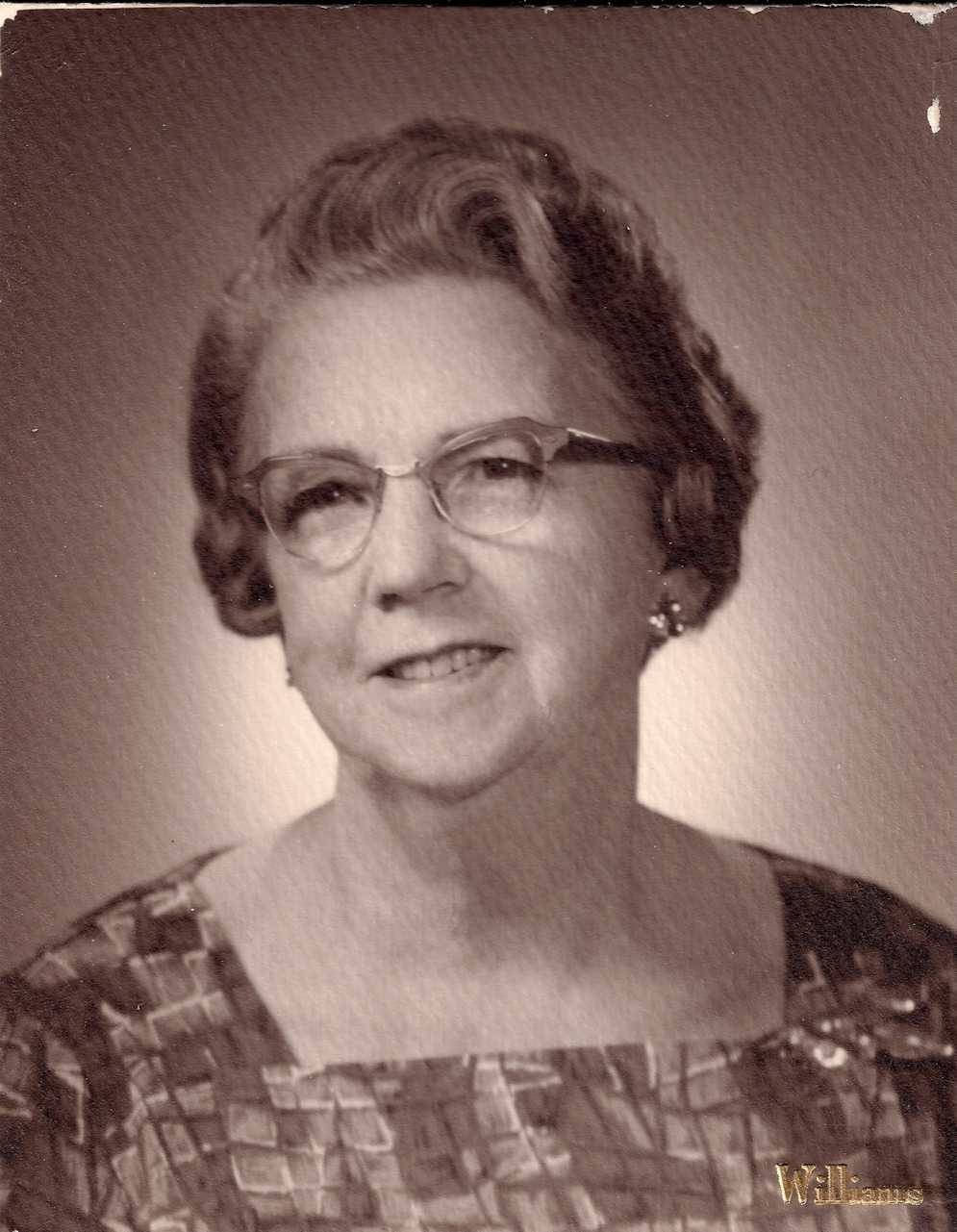
About Elizabeth Kuykendall Keller written by her sister, Ivah

Elizabeth Kuykendall Keller

Her grandchildren called her Momaw.  The following was paper-clipped into the guest book from her funeral service.  I'm guessing Ivah wrote it for Sarah Jane Keller Castleman as she was the only one of Momaw's daughters that had all boys at the time.  I remember Ivah was a very sweet aunt.  She wrote bio's on several family members.  I'm glad we have this one about Momaw...


Sept. 14, 1979 
Elizabeth Kuykendall Keller
About the first thing I can remember was Elizabeth and me playing-- jumping from one rafter to another while the carpenters were building the porch on our new house where the Shetleys live now.  She was about 3 1/2 years and I was 2 years (almost) older.  Then came time for me to go to school.  Mama asked the teacher if Elizabeth could go with me and they let her start.  We made it fine going because we had Claudia to take us.  But we only went 1/2 day and poor Claudia spent her lunch hour walking part of the way home with us.  Mama met us and we made it fine.
Somehow Elizabeth was more aggressive than I.  She had gone with Claudia to Central College and Had seen her first piano.  She took a plank and made a key board and she imagined she was making music.  I was so dumb, I didn't know what she was doing.  Papa and Mama decided she had talent and they bought an organ and she and Hettie learned a few tunes.  Mama's uncle could play so he taught them a few tunes.  It was a beautiful piece of furniture.  Papa bought a place in front of Hendrix College and we moved there so the little ones could be closer to school.  Then he bought a piano.  That was 70 years ago.  They gave Elizabeth lessons with Mrs Nell Cole-- paid her in cream and butter.  
When Elizabeth and I were in 6th grade they took her out of grade school and sent her to Central College so she could take lessons there and not walk from school to Central.  I was lost-- never had any more interest in school after that.  She begged for me to go to Central but papa wasn't able to send both of us.  She got a wonderful education then and finished her musical degree under the very best instructors.  She gave her recital in 1917 and got her degree then.  While she was at Central she had a studio close to public school and taught some pupils.
Then she and Claudia were asked to go to Wellford, the first consolidated school in Arkansas.  They stayed there 2 or 3 years.  Got wonderful salaries.  She was engaged to Perry Herrin and she spent most of her money on her trousseau.  Then she came home in the summer and started dating your father, Bill Keller.  They were married the next year-- 57 years ago.

Elizabeth was always the favorite of the whole family.  She was the bright spark in everyone's life and she expected lots of love and attention from every member.  She was a devout Christian from the time she could toddle off  to the Church and Sunday School and BYPU.
She was always kind and thoughtful of every member of her family.  Nothing was too good for any member of the whole family. 
Elizabeth had many many true friends.  She attended U of A in Conway and took some manual training so she could be in the class with your dad.  He did most of the work for her. 
She used to go with Papa when he would go on his 2 or 3 nights trip to places where they had pianos and she would play for them.  They would call in the neighborhood and they would all have a ball.  She was very popular. 
She and I loved our double cousins, Ida and Marietta King- and we spent each weekend together- either at their house or ours.  We were all about the same age. 
Friday AM
Guess you're home by now and taking care of all your boys.  Was that biography kinda what you wanted?  If there is anything else you want me to tell, let me know.  I could have written a book on her. 
I'm glad you were with your dad for that week.  I am really doing fine and I think I will be entirely well in a few weeks.  Has it snowed yet up there?  Believe me it is chilly here, but wonderful.  You won't believe it, I sold about a bushel of pom-granite this morning.  They were so big and beautiful.  I got 25 cents each for them.  It's better to sell them than see them hang there and burst open.  I will have about 20 or 25 dollars worth-- not bad eh. 
The Kordsmeier's gave me a bushel of the most beautiful tomatoes and yesterday I canned 13 quarts and 3 pints of tomato juice.  Tomorrow I am going to can pears.  I have already made preserves as I decided to can these.  I tell you there's not a free minute as long as I have a garden, pond, and everything around. 
Ida and I are going with some friends of ours to the Toad Suck fish place this P.M.  I want to take you all over there if you ever come and stay long enough.  You'd love it.  Must stop now and mail this. 
I love all of you,
Ivah